Loading...
Serving Horn Lake, MS and surrounding areas. (662) 707-8005
Hot attics and thin, settled insulation are costing Horn Lake homeowners money every month. Blown-in insulation fills every gap evenly and brings your attic up to the depth this climate actually demands.
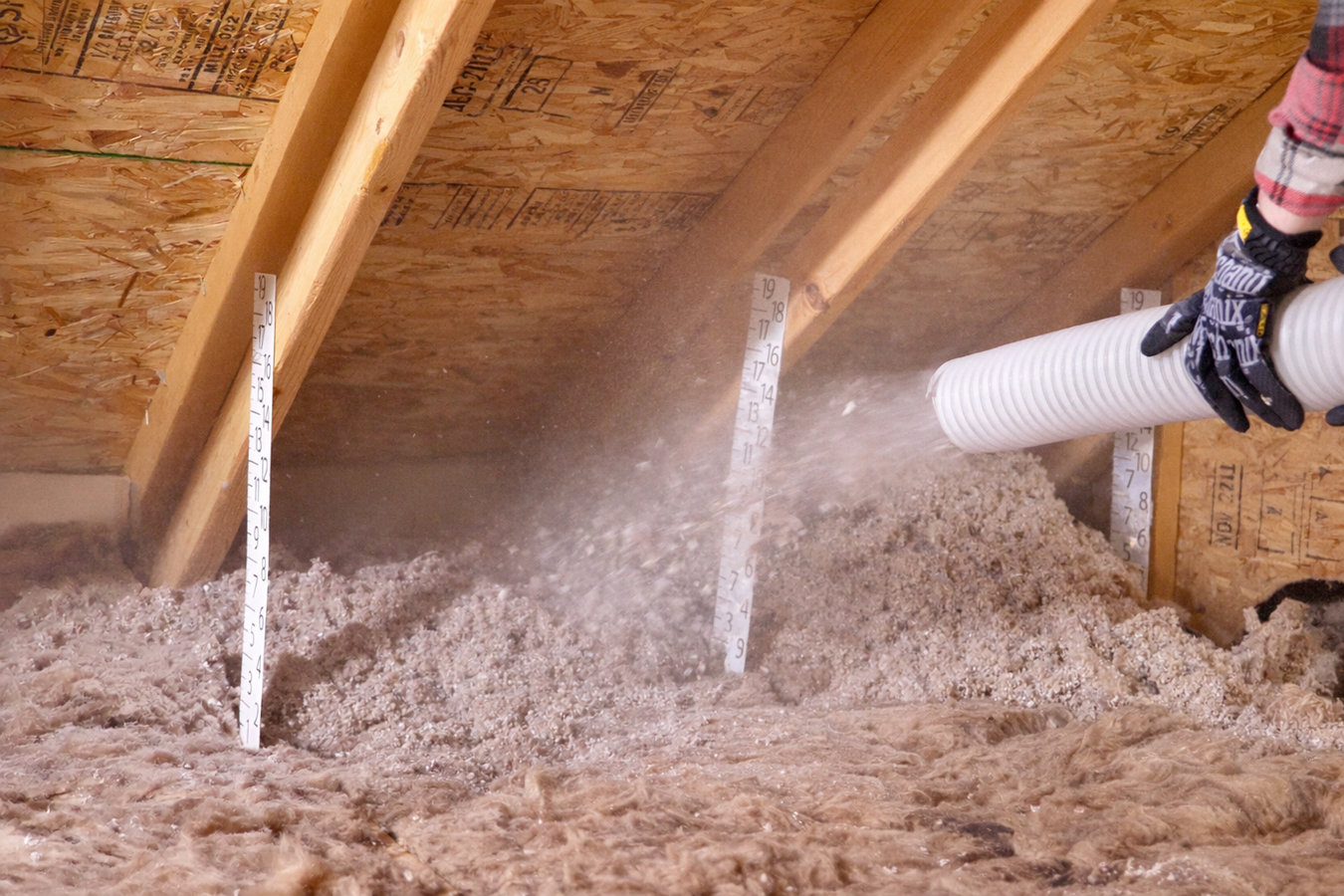
Blown-in insulation in Horn Lake fills attics and enclosed spaces with loose-fill fiberglass or cellulose material using a large hose, covering every corner evenly, and most standard attic jobs are finished in a single half-day appointment.
A large share of homes in DeSoto County were built in the 1970s through 1990s, and the insulation installed back then has spent decades settling and compacting. That means the thermal barrier between your living space and a 140-degree attic is thinner than you think. Blown-in insulation is one of the most direct ways to fix that without tearing anything apart.
If your home already has some insulation but it has never been checked, adding a blown-in top-up is often more cost-effective than a full replacement. For attics that need a complete upgrade, see our attic insulation service for a full overview of what a comprehensive attic project involves.
If rooms directly under the roof feel stuffy and hard to cool even when the air conditioner is running, attic insulation is likely letting heat pour through the ceiling. In Horn Lake summers, where attic temps can exceed 130 degrees, thin or settled material makes this problem severe. It is one of the most common complaints from homeowners in older DeSoto County neighborhoods.
If your Entergy bill has been creeping up year over year and you have not added any new appliances or changed your habits, your attic insulation may have settled below the level needed to do its job. The attic is the single biggest factor in your home's thermal envelope. A depth check costs nothing and answers the question quickly.
If you look into your attic and can see the tops of the wooden joists above the insulation, you almost certainly do not have enough. Adequate insulation for this climate should cover those joists completely - you should not be able to see them at all. This is a two-minute check any homeowner can do without any tools.
Homes built in Horn Lake's major growth decades - the 1970s through 1990s - were typically insulated to standards that are now considered well below adequate. Even if the original work was done correctly, the material has had decades to settle and compress. If no one has ever measured it, there is a good chance the depth falls far short of what this climate zone actually requires.
We install both fiberglass and cellulose blown-in material depending on what suits your attic and budget. For most Horn Lake homes, we recommend pairing the blown-in application with air sealing - plugging gaps around light fixtures, plumbing penetrations, and the attic hatch before any material goes in. Blown-in insulation laid over unsealed gaps works, but not as well as it should. If your attic has damage or debris that needs clearing first, our home insulation service covers full-home assessments that address attic, walls, and crawl space in a single plan.
We also handle top-ups on existing insulation that is still dry and in good condition. If you are not sure whether you need a full install or just a top-up, we measure what you have and explain the gap in plain terms before you commit to anything. After installation, we leave a depth ruler in the attic so you can verify the work yourself at any time.
Best for homes with existing insulation that has settled below recommended depth, or attics that were never fully insulated to current standards.
The complete approach - sealing air gaps first, then adding insulation depth - for homeowners who want the best thermal performance their attic can deliver.
Suited for homes where the existing material is dry and undamaged but simply does not meet the depth required for this climate zone.
For attics with moisture damage, pest contamination, or material that has degraded beyond the point where a top-up makes sense.
Horn Lake sits in DeSoto County in the northern Mississippi Delta fringe, where summer temperatures regularly climb above 95 degrees and humidity stays high from May through September. Without adequate attic insulation, that heat radiates straight down into your living space, and your air conditioner runs almost continuously just to keep up. The Department of Energy places this area in a climate zone that calls for attic insulation levels significantly higher than what most homes built before 2000 currently have - and many local homes fall well short of that target.
We serve homeowners throughout the area, including Southaven and Nesbit. Homes across this region share the same housing stock age profile and the same climate pressures - and blown-in insulation consistently delivers one of the clearest returns on investment of any home improvement in this area.
We will ask a few basic questions - your home's size, age, and what has been prompting your concern. We reply within one business day and can usually schedule a free in-home estimate within a few days of your call.
We access your attic - usually through a hallway or closet hatch - and measure the current insulation depth. We check for any moisture, mold, or ventilation issues before quoting. You get a written breakdown of what is included before any work begins.
The crew arrives with a truck-mounted blowing machine and lays drop cloths to protect your floors near the access point. One person directs the hose inside the attic; another manages the machine outside. Most Horn Lake attic jobs take one to two hours of actual blowing time.
We verify depth at multiple points across the attic floor before leaving. A depth marker stays in the attic so you can check it yourself anytime. Drop cloths come up, the area gets vacuumed, and we walk you through what was done.
Free estimate. No obligation. We reply within one business day.
(662) 707-8005We install to the attic depth recommended for DeSoto County's specific climate zone - not the minimum that looks acceptable on paper. That means your insulation actually performs at the level this area's summers demand, not just close to it.
Blown-in insulation over unsealed gaps delivers reduced results. We check for and address air leaks around light fixtures, plumbing penetrations, and the attic hatch before any material is installed. The U.S. Department of Energy recommends this approach - see their guidance at energy.gov.
We have been working in Horn Lake and the surrounding area long enough to know the housing stock, the climate pressures, and the specific attic conditions that show up in homes built during different decades here. That local experience shows up in how we assess and quote every job.
After every blown-in job, we leave a labeled depth ruler in the attic so you can verify the work yourself at any time. You do not have to take our word for it - you can check it the next time you are up there.
Every job comes with a written quote, a clear explanation of what was found, and verification that the work was done to the depth your home needs. You can check the North American Insulation Manufacturers Association at insulationinstitute.org for independent information on what proper blown-in installation looks like.
A full-home insulation assessment and plan covering attic, walls, and crawl space in a single coordinated project.
Learn MoreComprehensive attic insulation service that addresses depth, air sealing, and ventilation together for lasting results.
Learn MoreDeSoto County summers are long and hot - the sooner your attic is up to the right depth, the sooner your energy bills reflect it. Call or submit a request today.